Xsciens
-
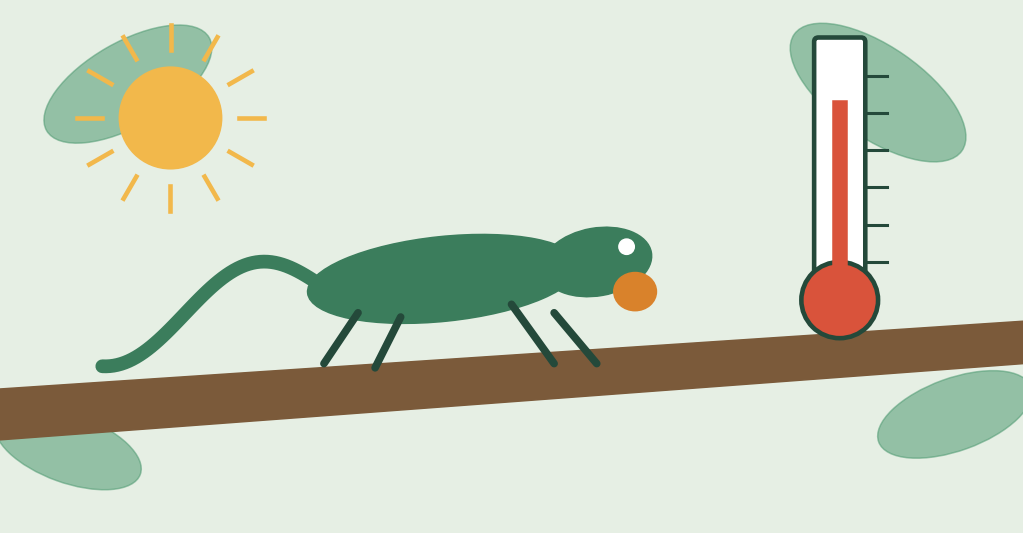
[Science] Forest Lizards Gained About 2°C of Heat Tolerance in a Decade
Lizards living deep in Caribbean forests can now tolerate about 2°C more heat than their counterparts a decade ago, while species that can step into cooler spots barely changed. The contrast, reported by a Yale-led team in PNAS, suggests that an animal’s habitat and its ability to regulate body temperature through behavior may influence how quickly its heat tolerance changes in a warming world. 原論文情報 / Original Paper Title: “Thermal ecology drives alternate responses to rising temperatures in Caribbean anoles” Authors: Saúl F. Domínguez-Guerrero et al. Journal: Proceedings of the…
-

Two Supermassive Black Holes May Be Closing In on a Merger — We Might Watch the Approach
Astronomers have found evidence of a second, previously hidden jet at the center of a galaxy called Markarian 501 — a sign, they argue, that the galaxy’s known supermassive black hole has a close companion, locked in an orbit lasting…
-

[Science] AI Mostly Avoids Unnecessary Medical Tests — But Stumbles Where Doctors Disagree
Ask a popular AI chatbot whether you need a thyroid ultrasound for a small nodule your doctor found by accident, and there is a real chance it will tell you to get one anyway — even though medical guidelines say…
-

A Green Hydrogen Catalyst Lasts Longest at the Freezing Point — RIKEN Finds
Cool a chemical reaction down, and it should slow to a crawl — that’s basic chemistry. But for one hydrogen-making catalyst, the story turns out to be more complicated than that. Researchers at Japan’s RIKEN institute have found that a…
-

[Economy] Just 3 in 10 Say They’ve Mastered AI as Job-Loss Fears Spread to Over-40s
Generative AI is everywhere in conversation, yet fewer than 3 in 10 people say they’ve actually mastered using it. According to “Quality of Society Index 2026,” an annual survey released on October 19, 2026 by Dentsu Soken, a large generational…
-

[Science] Menopause Hits Like a Cliff, Not a Slope — 1-Million-Woman Study Finds
A sweeping analysis of more than 300 million lab tests from over a million women suggests that menopause does not creep up gradually — it strikes as an abrupt, body-wide “physiological cliff,” with dozens of health markers shifting sharply around…
-

[Science] Climate Change Strengthened Hurricane Polo More Than El Niño, Study Finds
When Hurricane Polo intensified into one of the strongest and longest-lasting Category 5 hurricanes recorded in the eastern Pacific in September 2026, an exceptionally strong El Niño seemed the obvious explanation. But a rapid scientific analysis released on October 15…
-
[Science] What Is Cognitive Offloading? A Simple Guide to How It Works
Every time you set a phone reminder instead of memorizing an appointment, or ask a chatbot to summarize a report instead of reading it yourself, you are doing something psychologists call cognitive offloading. The habit itself is ancient, but a…
-
A Simulated Brain Circuit Builds Its Own AI-Like Learning System, MIT Finds
For decades, neuroscientists have faced a nagging puzzle. Modern AI owes its power to backpropagation, an algorithm that adjusts a network’s connections by propagating error information backward through precisely coordinated connections — a computation with no clearly established equivalent in…
-

[Science] Kids With Older Siblings Have Different Gut Bacteria — A Clue to Allergies?
Children with older siblings tend to develop fewer allergies — and new gut-microbiome research may point to part of the reason why. A team led by Japan’s RIKEN institute, together with researchers at five Japanese universities, analyzed stool samples from…